Surat, India · IST (UTC+5:30)

Nikunj Borad

Selected work

Two platforms where I owned the frontend architecture end to end — from data-fetching strategy to the last hover state.

Investment Analytics SaaS Platform

01 — Fintech SaaS

Investment Analytics SaaS Platform

Lead Frontend & Architecture Engineer

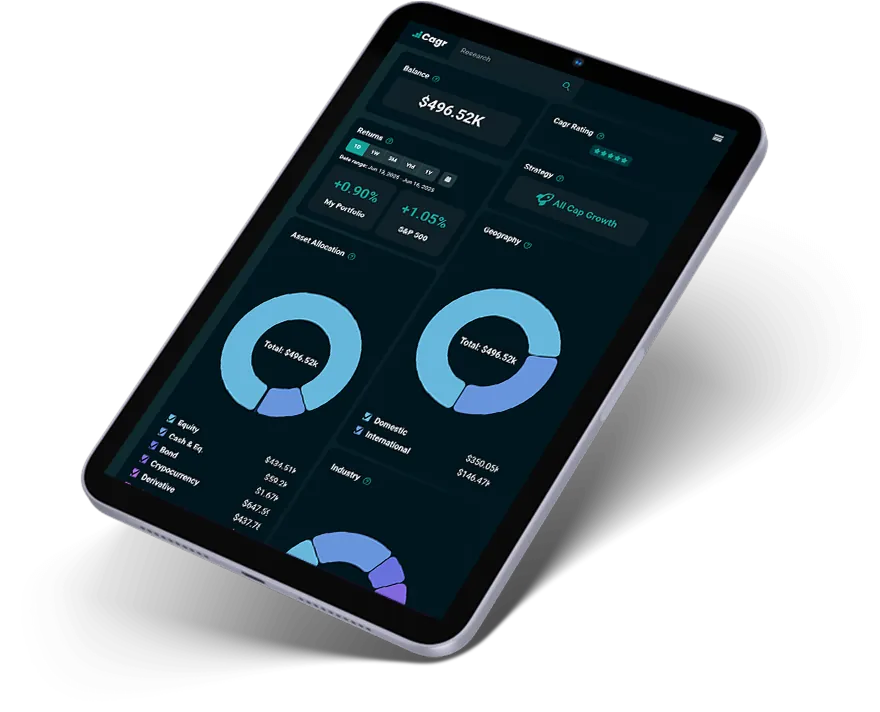
Self-serve platform giving retail investors automated stock ratings, portfolio analysis and backtesting.

  • Architected the frontend on Next.js Server Components for SEO and first-load performance; delivered 100% Lighthouse SEO and a 70% reduction in dashboard load time.
  • Built the CAGR Ratings Engine UI, surfacing 300+ metrics per stock through a visual star-rating system that made dense quantitative data scannable.
  • Developed interactive backtesting tools with historical simulations, performance graphs and multi-portfolio comparison charts.
  • Shipped Pro-tier features — watchlists, real-time alerts, screeners, downloadable reports — on WebSockets and Redis caching for near real-time updates.
  • Next.js
  • React
  • TypeScript
  • Tailwind
  • shadcn/ui
  • Node.js
  • PostgreSQL
  • Redis
Enterprise Product Specification Management System

02 — Enterprise tooling

Enterprise Product Specification Management System

Full-Stack Developer

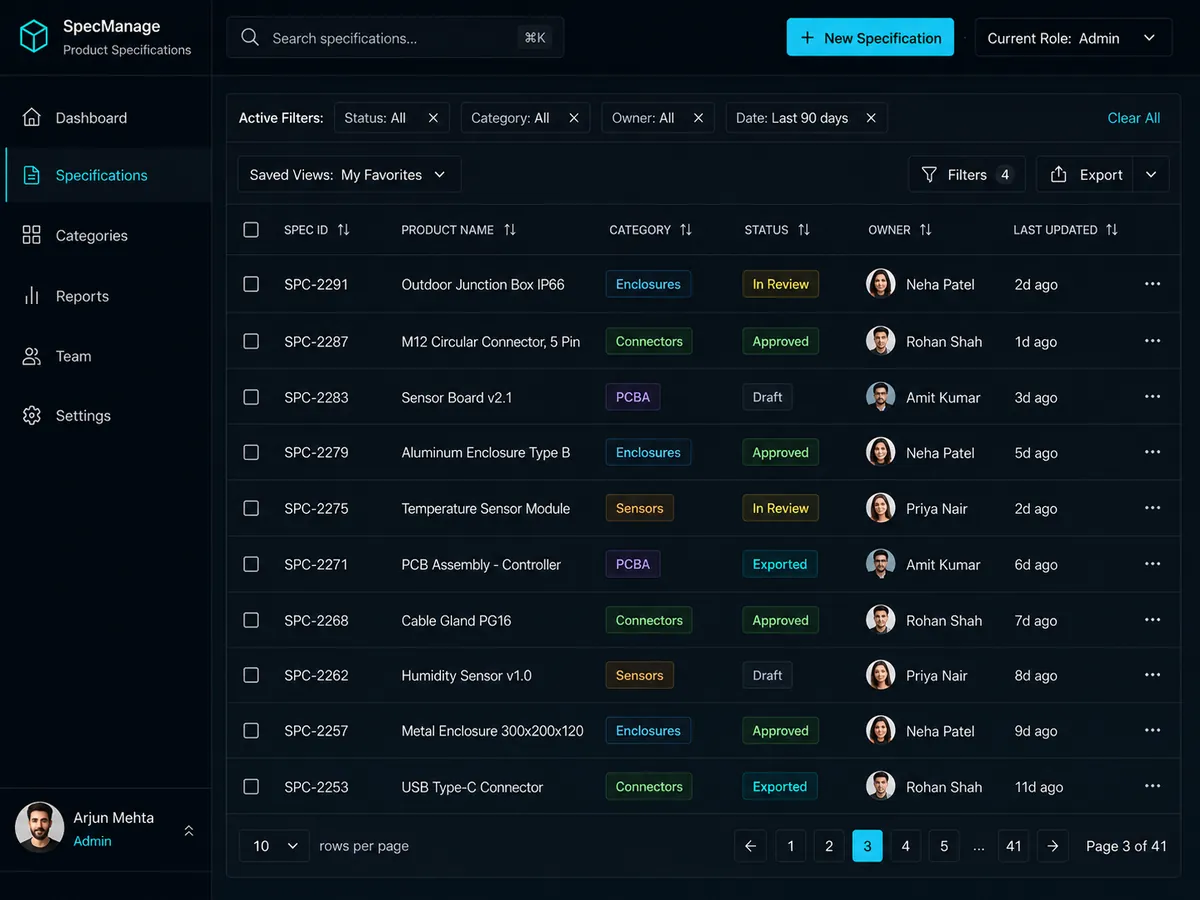
Collaborative system for managing complex hardware product specifications across sales, delivery and customer teams.

  • Built the full stack — React frontend and Node.js/MongoDB backend — for specification authoring, categorisation and export.
  • Implemented role-based access control across 5 user tiers (Super Admin, Admin, Project Manager, Sales, Customer) with tier-specific views and permissions.
  • Engineered advanced data tables with multi-dimensional filtering, sorting, saved filter presets and export, cutting the time to retrieve a specification set.
  • Paired TanStack Query with Zustand for server-state caching and optimistic updates, keeping large spec tables responsive under frequent edits.
  • React
  • TypeScript
  • TanStack Query
  • Zustand
  • Tailwind
  • Express
  • MongoDB

03 — Performance

Five seconds to 1.5

The flagship dashboard was waterfalling six sequential requests before it painted anything. Restructuring data fetching around TanStack Query caching, request deduplication and query-level optimisation cut it by roughly 70%. Drag the playhead.

Dashboard load · network waterfallPlayhead0.00s

Before 5.02s

document
vendor.js
app.js
GET /holdings
GET /ratings
GET /portfolio

After 1.46s

document (RSC)
/dashboard (cached)
island chunk
hydrate charts

Before · at playhead

After · at playhead

Requests to first paint

6 → 3

Lighthouse SEO

100 / 100

Levers

Server Components, query-level dedup, Redis cache, code splitting, image optimisation.

04 — Experience

Four years, four rooms

  1. April 2026 — August 2026

    Senior NextJs Developer

    eLaunch Solution Private Limited · Surat, India

    • Led a small frontend team producing pixel-perfect, mobile-responsive templates for online casino platforms — from Figma handoff to production, with a focus on speed, consistency and reusable components.
  2. January 2024 — April 2026

    Lead Software Engineer

    HVG Infotech Private Limited · Surat, India

    • Own frontend architecture for enterprise SaaS products, defining technical standards, review gates and delivery practices.
    • Cut flagship dashboard load time from ~5s to under 1.5s (≈70% faster) by restructuring data fetching around TanStack Query caching, request deduplication and query-level optimisation.
    • Architected Next.js App Router + React Server Components implementations optimised for SEO and time-to-interactive, achieving 100/100 Lighthouse SEO with structured data powering rich search and social previews.
    • Introduced an AI-augmented development workflow (Claude Code, GitHub Copilot) built on spec-first prompting and mandatory human review, increasing feature throughput ~40% without relaxing code-review or QA standards.
    • Mentor engineers through code review, pairing and architecture walkthroughs; authored the team's frontend conventions and pull-request checklist.
  3. December 2022 — December 2023

    Software Engineer

    HVG Infotech Private Limited · Surat, India

    • Delivered client-facing web applications in React, Next.js and TypeScript, from requirements through production release and maintenance.
    • Built complex UI surfaces including data-visualisation charts, interactive filterable data tables and multi-step form wizards with validation.
    • Standardised server state on TanStack Query and client state on Zustand / Redux Toolkit, eliminating duplicated fetch logic and redundant network calls across the codebase.
    • Integrated REST APIs and WebSocket channels to power real-time data updates and in-app notifications.
  4. June 2022 — November 2022

    Frontend Developer

    Invints Infotech LLP · Surat, India

    • Built e-commerce web applications and Shopify storefronts with a focus on conversion and page-speed.
    • Translated Photoshop mockups into pixel-accurate, mobile-first interfaces (HTML5, CSS3, JavaScript, jQuery, Bootstrap) and tuned load performance and cross-browser compatibility.

05 — Stack

What I reach for

Filter by layer. Everything here has shipped to production.

Core

  • React.js
  • Next.js (App Router)
  • Server Components
  • ISR / SSR / SSG
  • TypeScript
  • JavaScript (ES6+)
  • HTML5
  • CSS3

State & Data

  • TanStack Query
  • TanStack Router
  • TanStack Start
  • Zustand
  • Redux Toolkit
  • React Context
  • REST APIs
  • WebSockets
  • Axios

UI & Styling

  • Tailwind CSS
  • shadcn/ui
  • Material UI
  • Styled Components
  • Bootstrap
  • Responsive design
  • Cross-browser

Performance & SEO

  • Core Web Vitals
  • Lighthouse auditing
  • Caching
  • Code splitting
  • Lazy loading
  • Image optimisation
  • JSON-LD
  • Open Graph

Backend & Data

  • Node.js
  • Express.js
  • MongoDB
  • PostgreSQL
  • Redis
  • API design

Tooling & Cloud

  • Git
  • GitHub Actions
  • AWS
  • Vercel
  • Vite
  • Webpack
  • npm / yarn / pnpm

Practices

  • Frontend architecture
  • Technical standards
  • Code review
  • Mentoring
  • Agile delivery
  • Cross-functional collaboration

06 — AI-augmented engineering

AI is in the toolchain, not the shortcut

Specification → implementation plan → generated scaffold → human review → tests, so generated code meets the same bar as hand-written code. ~40% more feature throughput, same review gates.

  1. Every task starts as a written specification and an implementation plan. Nothing gets generated against a vague prompt — the constraints, edge cases and file boundaries are decided before any code exists.

  2. I design repo-level context and reusable prompt templates so AI output matches existing team conventions and architecture, rather than inventing a second style in the same codebase.

  3. Claude Code and GitHub Copilot handle large-scale refactors, framework migrations, edge-case discovery, type and schema generation, and first-pass code review.

  4. Nothing merges without human review and tests. Throughput rose ~40% precisely because the review and QA gates stayed exactly where they were.

  5. I build and modify Node.js/Express endpoints, adjust schemas and write integration glue to keep feature delivery unblocked — the frontend never waits on someone else's queue.

07 — About & availability

Nikunj Borad

Frontend architecture, measured in milliseconds

Frontend engineer with 4+ years shipping production React and Next.js applications, currently Lead Software Engineer on enterprise SaaS platforms.

I specialise in frontend architecture, SSR and Core Web Vitals performance, and type-safe TypeScript codebases — with enough Node.js and database range to deliver features end to end.

Seeking a fully remote, full-time senior frontend role with an international product team.

My local time

—:—:—

IST (UTC+5:30) — full working-hours overlap with EU and UK, 4+ hours daily overlap with US Eastern; flexible for scheduled US Pacific calls.

  • UK / EUFull
  • US East4+ hrs
  • SingaporeNear-full
  • US PacificScheduled

Secondary preference: on-site or hybrid in Surat, Gujarat, India. Languages: English (professional working proficiency), Hindi, Gujarati. Diploma in Frontend Web Development, Creative Design and Multimedia Institute, Surat.